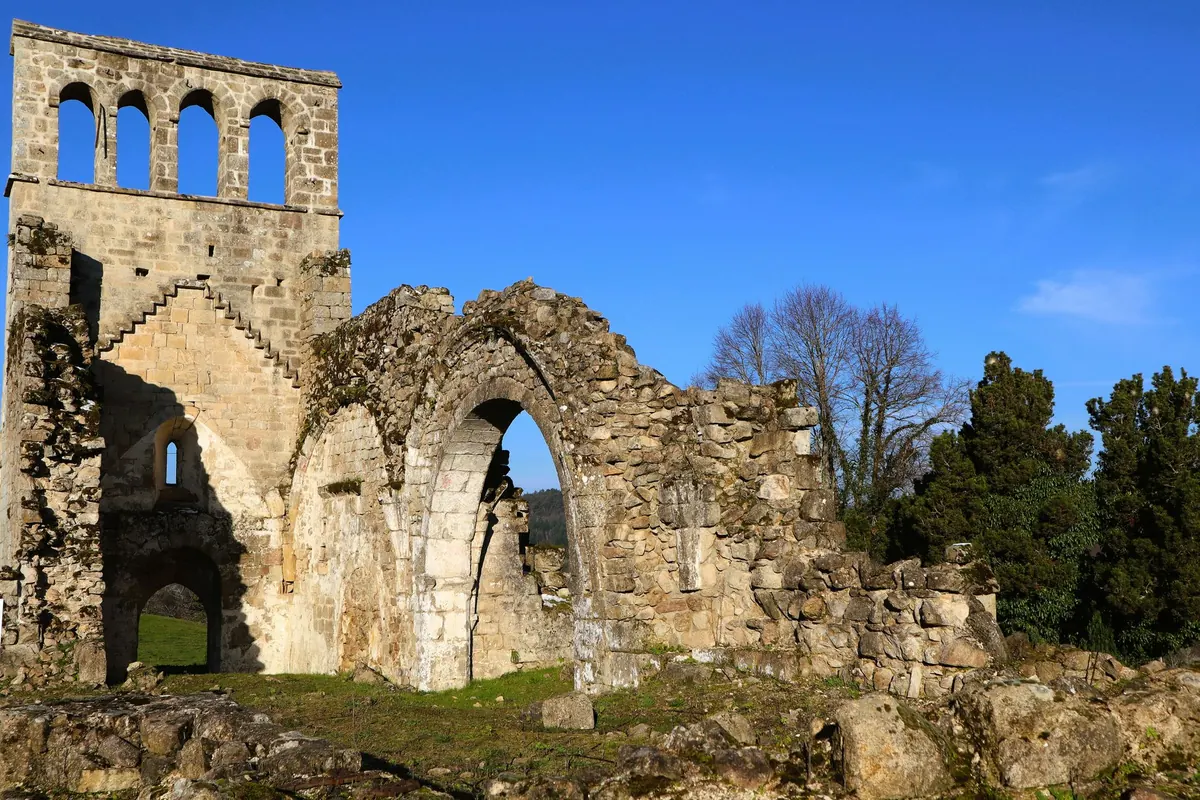
The gatehouse window at a Cistercian abbey in January is a small dark rectangle with a typed note behind the glass: church open for Vespers only, guesthouse closed until March. The lane off the main road had not been gritted, so the last hundred metres were walked. What the visit offered instead of a full tour was an hour of near-silence, twenty people in a freezing choir, and light through the south windows at such a shallow angle that the pillars seemed to lean.
Winter is not the season for a comprehensive monastery visit. It is the season for a narrow, well-chosen one. Plan around shorter hours, closed lanes and cold interiors rather than against them, and the quietest months become an advantage. The monastery stops being a site to be covered and becomes a single event to be attended: one office, one cloister, one patch of winter light. You do not see everything. You see what is actually there.
Winter light is the great compensation. In summer, the sun is high and the church interior can feel evenly lit, almost flat. In winter, the sun stays low and slices through south windows at a sharp angle. Pillars cast long shadows across the floor. Stone that looks grey in July looks honey-coloured for twenty minutes in December. At a Benedictine abbey in Bavaria, the late-afternoon sun can strike the nave floor so precisely that visitors stop talking without being asked. At a Cistercian church, where ornament is deliberately sparse, the light becomes the decoration: it moves, it fades, it disappears behind the pillars during the psalms.
This is not incidental. Monastic churches were often oriented and windowed with the liturgy in mind, and winter exposes that logic. Vespers falls at dusk. Lauds begins before sunrise. The building is used at the hours when natural light is weakest, which is why candles, lamps and the glow of the sanctuary lamp matter so much. A winter visit lets you feel the rhythm rather than just read about it. The cold also sharpens the senses: breath visible in the choir, the smell of wax and stone, the sound of boots on tile. You notice more because there is less to distract you.
Access is the practical obstacle. Many monasteries sit at the end of narrow rural lanes, and local councils do not always grit those lanes. A road that is easy in June can be impassable in January after a frost or a light snowfall. Bus services to villages near monasteries are often reduced in winter, and some stop running altogether on Sundays. If you are driving, check the weather forecast and road conditions before setting out. If the lane looks doubtful, park at the main road and walk. That last hundred metres is part of the visit.
Footwear matters more than you think. Courtyards can be icy, and paths between the church, guesthouse and car park may not be cleared. A headlamp or small torch is useful because winter afternoons end early; if you stay for Vespers at 5 p.m., you may be walking back to the car in darkness. Keep a blanket and a flask in the car. It sounds excessive until you are standing in a cold choir stall for an hour and then facing an ungritted lane home.
The question is rarely "Is the monastery open?" It is "What part of it is open?" Many monastic churches remain open for the Liturgy of the Hours throughout winter, but the cloister, museum, shop and guesthouse may be closed. Benedictine and Cistercian communities often welcome visitors to Mass and Vespers year-round, though the timetable changes. Trappist guesthouses commonly close after Christmas and reopen before Lent. Some retreat houses stay open but require advance booking. Carthusian monasteries are not open to visitors at all, winter or summer, so it is worth knowing the order before you travel.
Orthodox monasteries follow a different calendar and may have important winter feasts, which can mean longer services and more pilgrims. A Greek monastery on a snowy mountain may have a church open for a feast day but no regular visitor access. A Franciscan friary in a town may keep its church open all day but have no guesthouse. The practical rule is simple: the more contemplative the order, the less public access you should expect. The more pastoral the order, the more likely the church is open, but the less likely you are to find silence.
Winter is a good time to remember that a monastery is not primarily a heritage site. The church may be open for prayer while the guided tour is suspended. The shop may be shut while the chapel is warm and lit. You may arrive expecting a full visit and find only a notice on the gatehouse window. That is not a failure of the trip. It is a clarification of what the place is for. Adjust your expectations and you will often receive more than you planned.
With fewer visitors, silence is easier to keep. Do not treat the church as a warm refuge or a place to chat. If a service is in progress, enter quietly, stand or sit at the back, and follow the posture of the community. Do not walk around, take photographs or read interpretive panels during prayer. In some churches, men remove their hats; in Orthodox churches, women may wear a head covering. If you are unsure, watch what others do and err on the side of restraint.
The cold is not an obstacle to prayer; it is part of the offering.
That sentence, scratched into a guestbook at a French abbey, captures the winter discipline. You are not there to be comfortable. You are there to keep watch, even for an hour. If you are the only visitor, do not feel obliged to stay for the whole office, but stay for one psalm. Listen to the chant, watch the light fade, and then leave without noise.
What winter offers instead of a full tour is a concentrated experience. The Cistercian abbey from the opening of this article did not give a cloister tour, a museum or a shop. It gave Vespers in a freezing choir, twenty people singing, and south light that made the pillars lean. That was enough. A narrow visit can be more memorable than a comprehensive one because it asks something of you: patience, warmth, silence, and the willingness to walk the last hundred metres when the lane is not gritted.
Go for less, and you may receive more. The monastery in winter is not a destination to be ticked off. It is a place to attend to, briefly and attentively, while the light is low and the world is quiet.
Photo: El Capra / Pexels